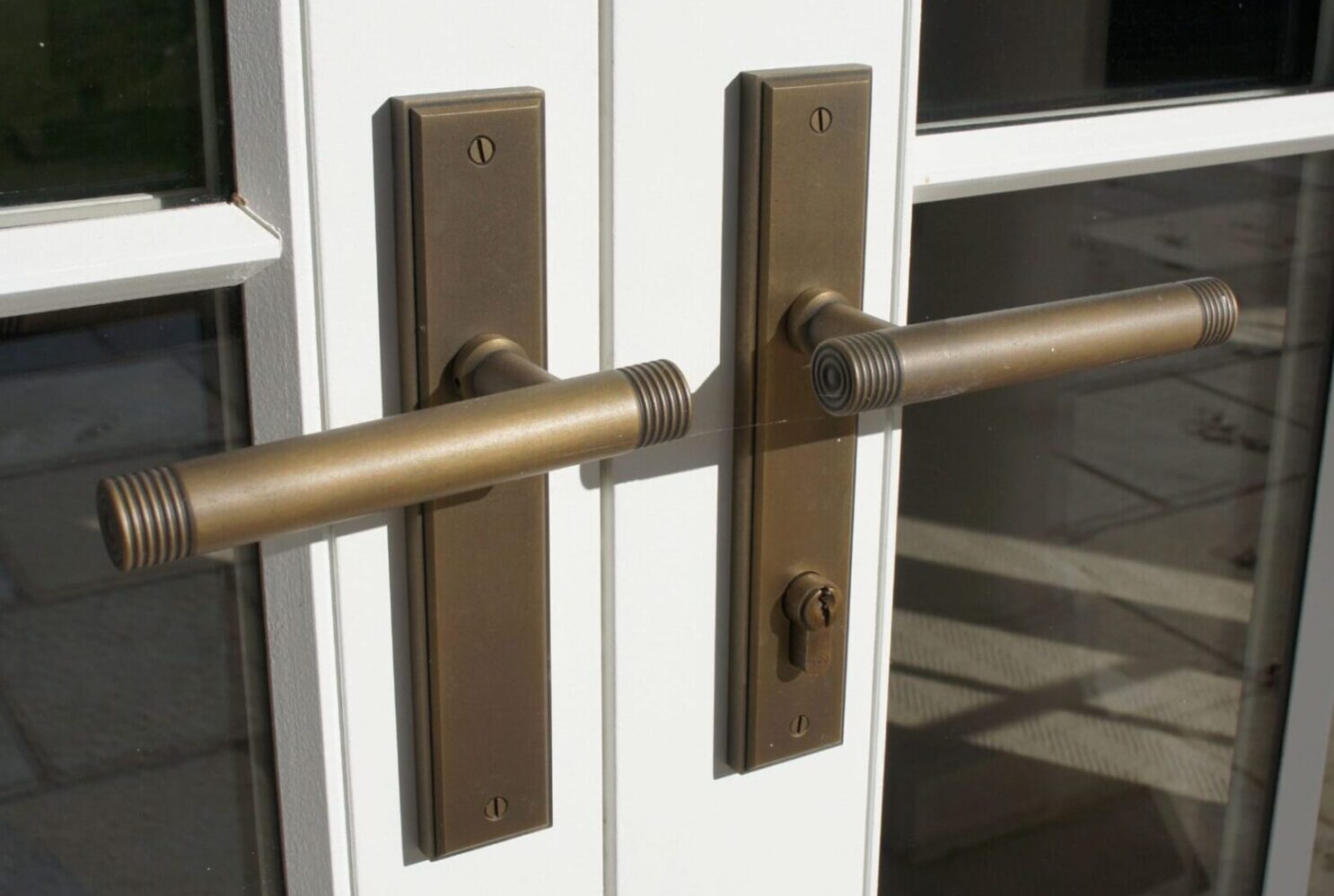
When people invest in bespoke timber windows and doors, they spend a great deal of time choosing the style, the timber and the glazing. The ironmongery, meaning the handles, stays, fasteners, hinges and bolts that complete the job, is often chosen last and quickly.
That’s a mistake we’d encourage you to avoid. The right ironmongery lifts a beautiful piece of joinery. The wrong ironmongery lets it down, both in how it looks and how it works. Here’s what you need to know.
| 01What is it? | 02Window ironmongery | 03Door ironmongery |
| 04Finishes | 05Heritage projects | 06Checklist |
1 | What is architectural ironmongery? |
Architectural ironmongery is the collective term for all the hardware fitted to windows and doors, from hinges and handles to locks, stays, bolts and espagnolettes. On a timber window or door, it does three jobs.
Functional It controls how the window or door opens, closes, locks and seals. |
Aesthetic It makes a big difference to the finished look of the window or door. |
Structural Specified correctly, it supports the long-term performance and weather resistance of the frame. |
2 | Window ironmongery |
Casement fasteners The mechanism that holds a casement window shut. Available in traditional wedge-plate designs for period properties, or modern inline styles for contemporary builds. Finishes typically include polished chrome, satin chrome, antique brass, black and powder-coated colours. |
Casement stays The bar that holds an open casement at a chosen position. Peg stays are traditional and suit period properties well. Friction stays give more flexibility and a cleaner look on modern windows. |
Sash lifts & fasteners On sliding sash windows, the sash lift lets you raise the lower sash, and the sash fastener locks the two sashes together at the meeting rail. Period and heritage projects often call for a traditional Fitch or Brighton fastener, with a finish and profile that suit the window’s mouldings. |
Hinges Often overlooked, hinges are critical to how a casement window performs over its lifetime. Butt hinges, cranked hinges and friction hinges all behave differently, and the choice affects both how the window opens and how well it seals. |
3 | Door ironmongery |
Handles & levers Whether you choose a traditional cottage latch, a period-style knob or a contemporary lever handle, agree the details early so the door is made to suit. |
Espagnolette handles A multi-point locking system common on front doors. One turn of the handle locks the door at several points at once, giving better draught exclusion and security. Available in a wide range of profiles and finishes. |
Locks & cylinders Security requirements, insurance ratings and door thickness all affect which lock is right. Multi-point locking on external timber doors performs significantly better than a single deadbolt. |
Letterplates Often treated as an afterthought. On a bespoke timber door, a well-chosen letterplate in a matching finish makes a real difference to the overall look. |
Hinges & pivots External timber doors are heavy. Under-specified hinges cause doors to drop, bind and stop sealing, which leads to draughts, water getting in and early wear on the frame. We always specify hinges to suit the door’s weight and use. |
Flush & tower bolts Common on double doors and French doors. Flush bolts sit neatly within the face of the door. Tower bolts are surface-mounted and suit more traditional, rustic styles. |
4 | Choosing a finish |
The finish you choose affects both how your ironmongery looks and how long it lasts.
| Finish | Character | Best suited to |
| Polished Brass | Warm, traditional | Period, Victorian, Georgian |
| Antique Brass | Softer, aged look | Cottage, heritage |
| Satin Chrome | Clean, understated | Contemporary, Scandinavian |
| Polished Chrome | Bold, bright | Modern, minimalist |
| Matt Black | Strong, graphic | Contemporary, industrial |
| Powder Coated | Colour-matched | Bespoke, bold schemes |
5 | Heritage & conservation projects |
If your property is listed or in a conservation area, the ironmongery may be subject to planning conditions. Traditional styles such as monkey tail fasteners, flush sash lifts and period-appropriate hinges are often needed to match the original hardware.
We have extensive experience of specifying ironmongery for listed buildings and conservation projects, and we’re happy to advise from the earliest stage of your project.
Choosing a new front door? Read our guide to choosing the right front door ›
Seven questions worth answering before your windows and doors are made.
We supply and fit ironmongery across our full range of timber windows and doors. We’re happy to work to your architect’s specification or help you choose from scratch.
Call us: 01244 371571Send us an enquiryor email enquiries@parryjoinery.co.uk
