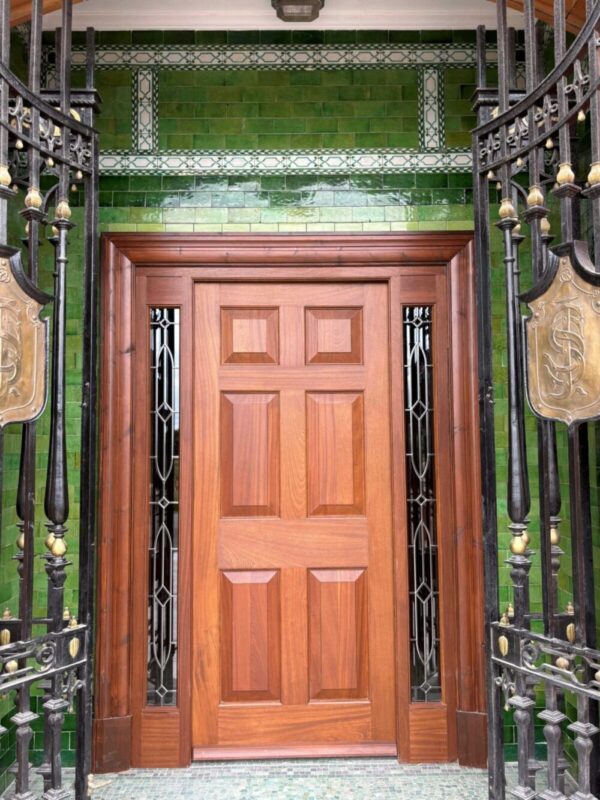
Your front door does more than most people give it credit for. It’s the first thing visitors see, it sets the tone for the rest of the property, and it takes more punishment from the elements than almost any other joinery on a building. Getting it right is worth the time.
Here’s what we think about when we’re helping clients choose theirs.
1 | Start with the property |
The style of your front door should be led by the building it belongs to. A Georgian townhouse, a Victorian terrace and a contemporary new build all have different characters. A door that ignores that will always look slightly wrong, however good the finish.
Period properties Traditional details matter: raised and fielded panels, period-appropriate glazing and correct proportions. |
Contemporary buildings Cleaner lines and simpler profiles tend to work better. |
Listed, or in a conservation area? Your options may be more tightly defined. A specialist manufacturer can guide you through what’s required before you commit to a design.
2 | Choose the right timber |
Accoya: our most popular choice Exceptionally stable, highly durable and carries an outstanding paint finish, so it’s ideal for an external door that needs to perform and look good for decades. It’s also FSC certified, which matters to a growing number of clients. |
Solid oak: the natural alternative If you’d prefer to leave the timber unpainted and let the grain speak for itself, oak ages beautifully and brings a warmth that painted finishes can’t replicate. |
Want to compare more species? See our timber choice guide ›
3 | Choosing a colour |
Colour has a big effect on how a door sits within its surroundings. Three things are worth considering.
Match the character Period homes often suit traditional colours. Deep greens, blues and classic whites have stood the test of time for a reason. Contemporary properties can carry bolder or more neutral choices. |
Look at the surroundings What colour is the brickwork? The window frames? A door doesn’t exist in isolation. It works as part of the whole facade. |
4 | Glazing |
Glazing can transform a front door, adding light to a dark hallway or giving a solid door a more open, welcoming feel.
Stained glass One of our most popular choices, particularly for period properties, where it adds real character and kerb appeal. |
Obscure or textured Where privacy is a priority, it works well without losing the light. |
Clear glass For contemporary doors, a simple clear pane keeps things clean and unfussy. |
See all our glazing options ›
5 | Ironmongery |
Hardware is often chosen last and thought about least. It shouldn’t be. Choose ironmongery that suits the style of the door and is built to last.
Read our full guide to ironmongery for timber windows and doors ›
6 | Bespoke vs off the shelf |
Standard doors are built to standard sizes. Most properties aren’t.
| Off the shelf | Bespoke | |
| Size | Standard sizes only | Made to fit your opening exactly |
| Fit | Gaps and packing to make it fit | No awkward gaps |
| Proportions | Compromised to suit the stock size | Right for the building |
| Design | Choose from a range | Profile, panels, glazing, colour and hardware all specified by you |
Seven questions worth answering before you speak to anyone about a new door.
We manufacture bespoke timber front doors in our Chester workshop, with over 40 years of experience in bespoke joinery. Tell us about your property and we’ll help you get every detail right.
Call us: 01244 371571Send us an enquiryor email enquiries@parryjoinery.co.uk
