Window Restoration

Same window.
New glass. A warmer home.

We retrofit ultra-slim vacuum glazing into your original timber sash windows, with no new frames and no change to how your windows look. Conservation-area and listed building friendly.

Contact us →

  • Conservation area & listed building friendly
  • Backed by 40 years of R J Parry joinery
  • Chester-based workshop, same team start to finish
  • Fineo approved installer
Simulated thermal · single glazed

Glass surface

~8°C

Cold, heat lost to outside

U-value (centre pane)

5.8 W/m²K

Heat loss: HIGH

Fineo vacuum glazed

Glass surface

~19°C

Near room temp, heat stays in

U-value (centre pane)

0.7 W/m²K

Drag to compare: illustrative example of heat loss before and after Fineo vacuum glazing

The Service

PATH 01

Glazing-only retrofit

For sashes and casements where the timber frame is sound. We remove the existing glass, fit vacuum glazing in its place, and fit new beads.

  • All work carried out on site, with scaffold access arranged by the client
  • Old glass removed and rebates routed to accept vacuum glazing
  • New glazing beads fitted throughout
  • Lead/iron weights re-balanced for the new glass
  • Ideal for listed buildings and conservation areas

PATH 02

New bespoke window

Where a survey finds structural failure or frames beyond saving, we build a matching replacement in our own Chester workshop, made by the same team behind R J Parry’s heritage joinery work.

  • Matched exactly to the original profile and mouldings
  • Manufactured in our Chester workshop by R J Parry (Joinery) Ltd
  • Glazed with vacuum glazing to the same spec
  • Manufactured in timber of your choice

0.7 W/M²K

U-Value

Better than triple glazing

7.7mm

Total Thickness

Fits original frames

Reduced

External Noise

Better than double glazing

40+

Years of Joinery

Chester-based since 1986

*Performance data sourced from the Fineo website and is Fineo’s own published data. Figures are specific to Fineo vacuum glazing. Results may differ if alternative vacuum or insulating glass products are used.
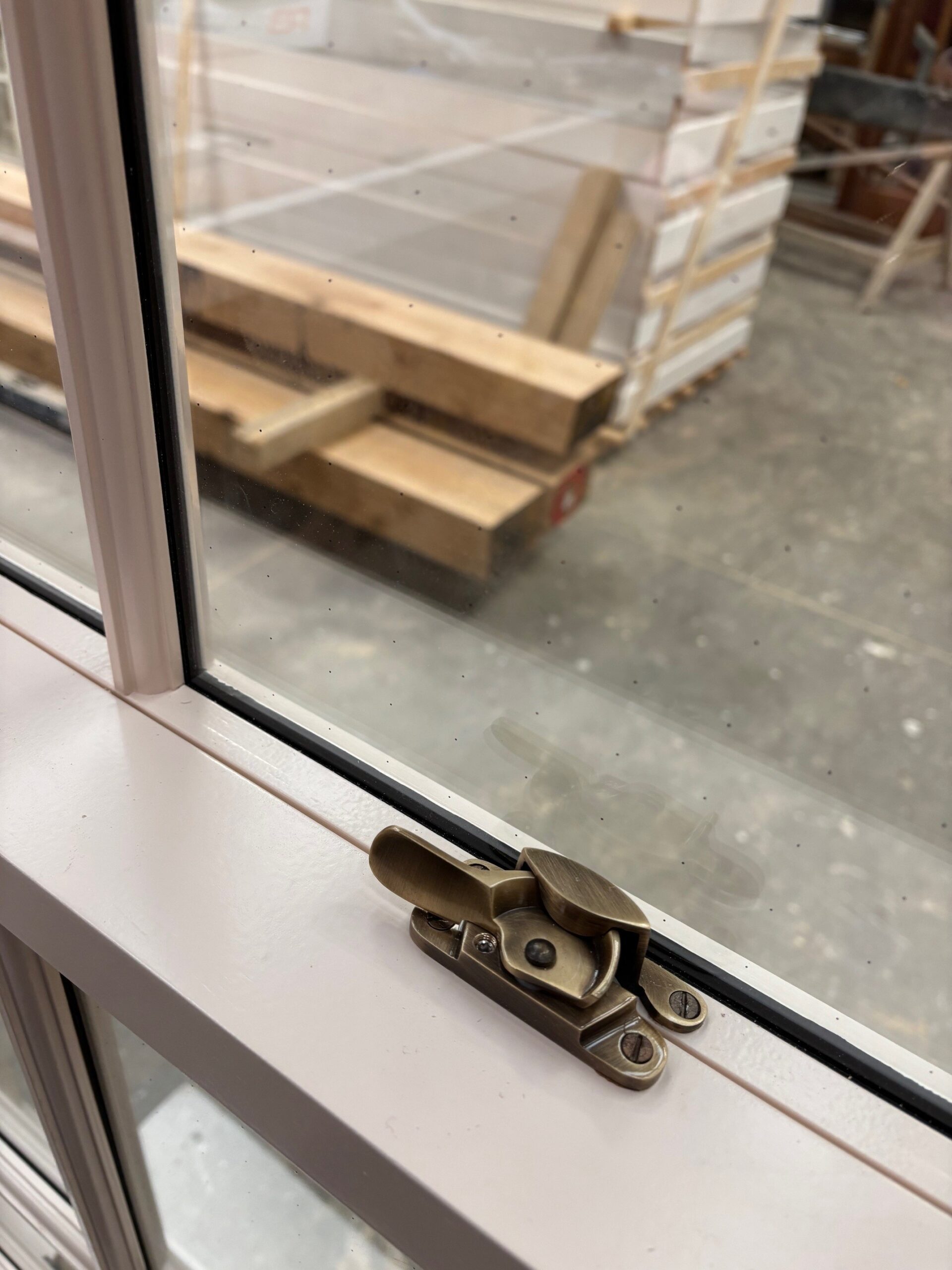
Close-up of vacuum glazing pane in the R J Parry workshop

One thing to know

The small dots in the glass

Vacuum glazing holds two panes of glass together with a sealed vacuum gap between them, with no gas, no air, no spacer bar. To stop the panes from touching under atmospheric pressure, tiny support pillars are set between the panes at regular intervals.

These pillars are very small, typically 0.5mm in diameter, and visible as a faint regular pattern of dots when you look closely at the glass. They are not a defect. They are an inherent part of how vacuum glazing works, and once the window is installed and you’re looking through it rather than at it, most people don’t notice them at all.

We mention this upfront so there are no surprises on installation day.

Head over to our case study section to see some examples of projects we have done with Fineo glass.

View our case studies →

Frequently Asked Questions

Will this affect my listed building consent or conservation area rules?
In most cases, retaining the original frame and only upgrading the glazing is viewed far more favourably by conservation officers than full window replacement, and often falls outside what needs formal consent. Rules vary by local authority and by listing grade, so we’d always recommend checking with your conservation officer before work starts. We’re happy to provide supporting information for that conversation.
How is vacuum glazing different from ordinary double glazing?
Double glazing uses a gas-filled gap between two panes, typically 16-20mm wide, held apart by a spacer bar. Vacuum glazing removes the air entirely and uses tiny support pillars instead of a spacer bar, so the whole unit is a fraction of the thickness (around 7.7mm rather than 20mm or more), while insulating as well as triple glazing.
Do I need Building Control involved?
Replacing glass within an existing frame does not require building control notification. Full window replacement does require building control, so please flag this to us if your job involves new frames and we will advise accordingly.
What if a window needs replacing rather than reglazing?
If our survey finds the frame has failed structurally or is beyond economical repair, we’ll recommend Path 02, a new bespoke window built in our Chester workshop, matched exactly to the original profile and glazed to the same vacuum-glazing spec.
How long does a typical job take?
This depends on the number of windows. Vacuum glazing glass can have a significant lead time due to its manufacturing process, so please speak to us about your time limits before committing.